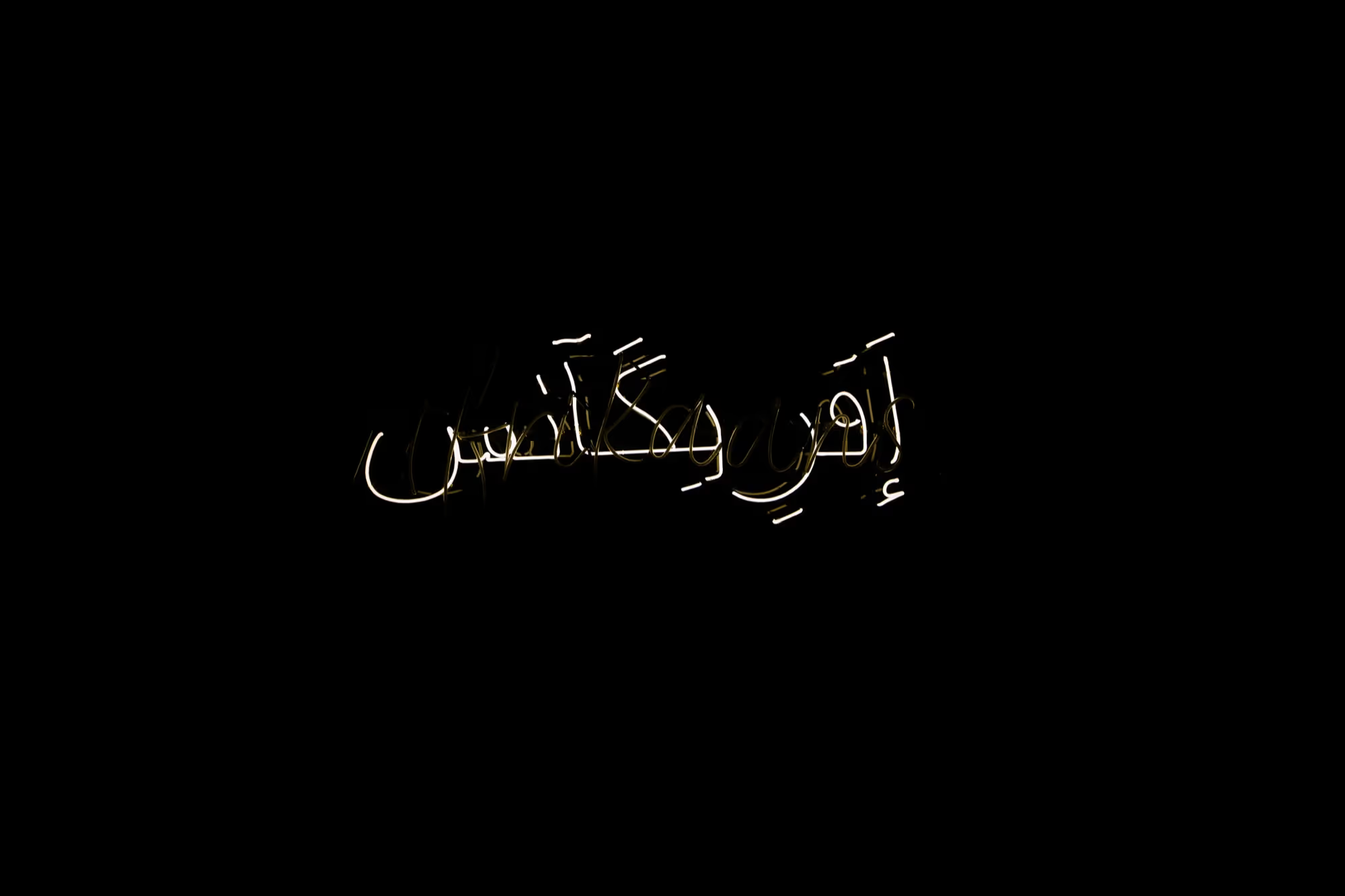
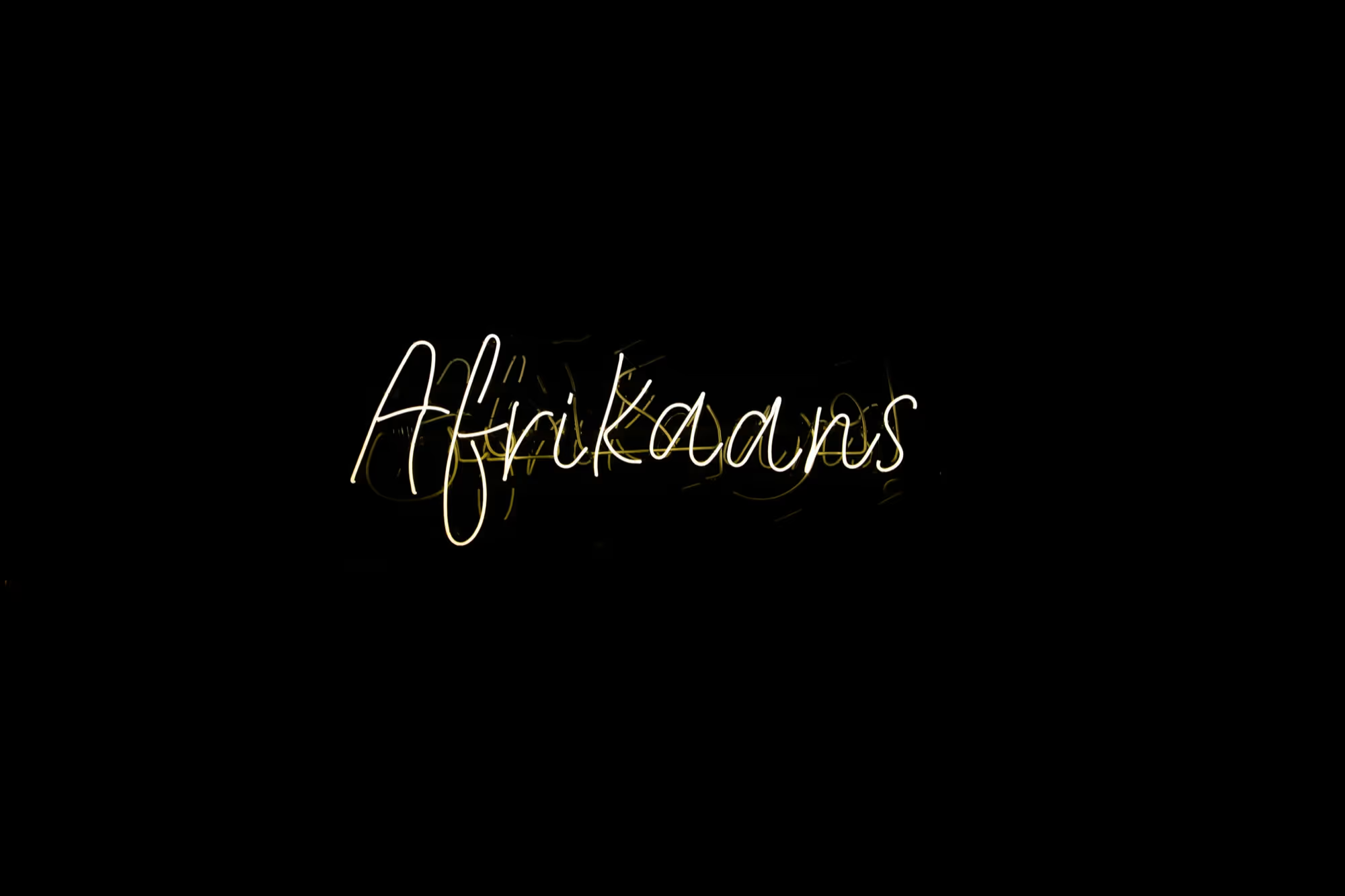
As an Afrikaans speaker, Skupin is intrigued by the role that Afrikaans plays in shaping her consciousness – her own and collectively in South Africa. The first written Afrikaans appeared in Arabic script, as part of Muslim teachings in the Cape Malay community of Cape Town. Moedertaal invites viewers to appreciate the appearance of the word ‘Afrikaans’ in conjunction with its transliteration into Arabic script. By accentuating language-as-image, Skupin aims to provoke a sensual and mediated response required by writing. The artwork contributes to the contemporary discourse of Afrikaans’ future, creating a new paradigm to consider the continuation of the conversation, focused on expanding our notion of the language and reimagining a way forward. Skupin wants viewers to think about Afrikaans in the context of its origins and evolution. Moedertaal is installed on one of the oldest farms in the country, which is poignant, and its placement alludes to the relationship between the landscape of the Cape, the pervasive socio-economic and cultural structures that evolved here, and the emergence of Afrikaans in this milieu.
Marinta Skupin, born in Williston, South Africa, lives and works in San Diego, California, as a Prebys-endowed scholar and MFA student at San Diego State University. She holds a BFA and an MA in Arts Administration from the University of New Orleans.
Her museum career spans the New Orleans Museum of Art, the Louisiana State Museum, the San Diego History Center and the Laguna Art Museum as Curator of Education.
Her work has been exhibited at the Institute of Contemporary Art San Diego, Gallery 825 Los Angeles, and features in the Louis Armstrong House Museum's permanent collection. Her interests encompass music and language, particularly Afrikaans literature and contemporary discourse.